Ethiopia 2025 – AFP
For nearly three years, Ethiopia’s Amhara region has been the scene of a violent and largely overlooked conflict between federal forces and Fano militias. While frontlines shift across rural areas and mountain roads, civilians have found themselves trapped in between — exposed to gunfire, landmines, roadblocks and sudden military operations.
In farming villages and small towns, daily life has been deeply disrupted. Many civilians have been wounded while trying to move, work or simply take shelter during clashes. Others have lost their livelihoods, their mobility, or access to basic services as insecurity cuts roads and isolates entire communities.
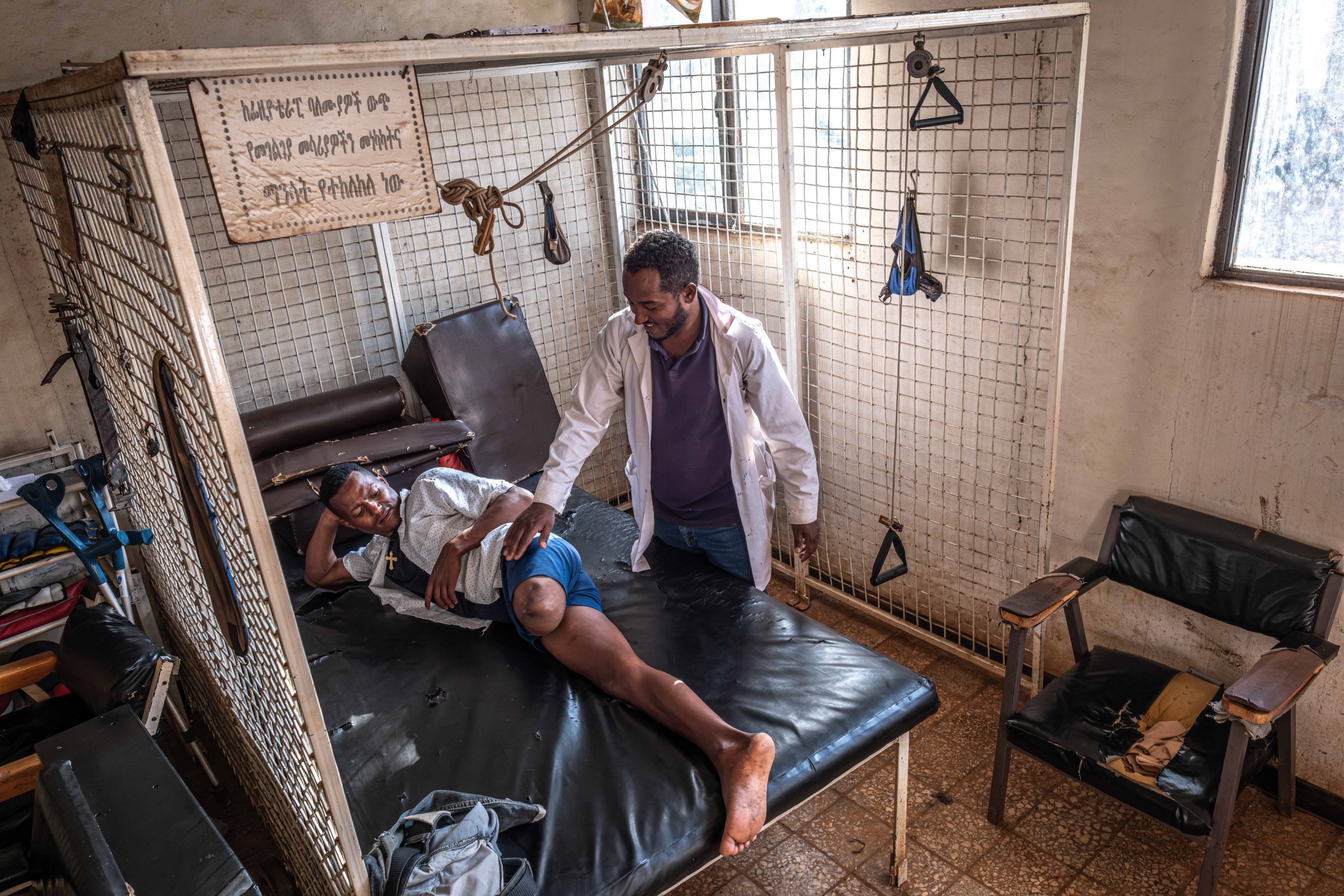
These photographs were taken in Bahir Dar, the regional capital of Amhara — a city that appears relatively calm compared to surrounding rural areas, yet bears the weight of the conflict through the people arriving from outside. Inside the Physical Rehabilitation Center, supported by the International Committee of the Red Cross (ICRC), young men and women injured by gunfire or landmines undergo long and uncertain recovery processes. Some are former farmers, students or informal workers, now learning to walk again with prosthetics or relying on physiotherapy to regain partial mobility.
Beyond the rehabilitation rooms, Bahir Dar continues its daily rhythm: crowded markets, informal transport, young people gathering around smartphones, families waiting for buses. But behind this appearance of normalcy lies a widespread sense of fatigue and disillusionment. With elections approaching and large parts of the region deemed too insecure to vote, many residents express uncertainty about the future and little faith in political solutions.
Through the faces and gestures of those injured, waiting, or simply passing time, this work documents how war reshapes civilian lives long after the gunfire fades — and how survival, in Amhara today, often means learning to live with loss, trauma and unresolved conflict.
📸 For @afpphoto @afpnewsagency


