Ethiopia 2026 – AFP
A young Borana Oromo herder runs after her goats to keep the herd together in Yabelo, in southern Ethiopia. Across the Borana Zone, livestock are far more than an economic asset. They provide food, income and security, and remain at the heart of community life.
Life here follows the rhythm of the herds across a vast and beautiful landscape. But this apparent calm is fragile. Repeated droughts and increasingly unpredictable weather have placed growing pressure on water and pasture, while competition over these resources has contributed to intercommunal tensions. A dry season, a failed rainy season or the spread of disease can quickly threaten an entire way of life.
In late August, an outbreak of Peste des Petits Ruminants, or PPR, a highly contagious viral disease affecting goats and sheep, was reported in Borana. Residents reported mounting livestock losses, although no comprehensive death toll has been released. Such outbreaks are not unusual in this area…
To confront threats like these, the World Bank’s De-risking, Inclusion and Value Enhancement of Pastoral Economies, or DRIVE, project aims to strengthen the resilience of pastoral communities. Its Index-Based Livestock Insurance scheme uses satellite measurements of local pasture conditions to trigger payouts as drought develops, helping families purchase fodder, protect their animals and avoid losing their herds.
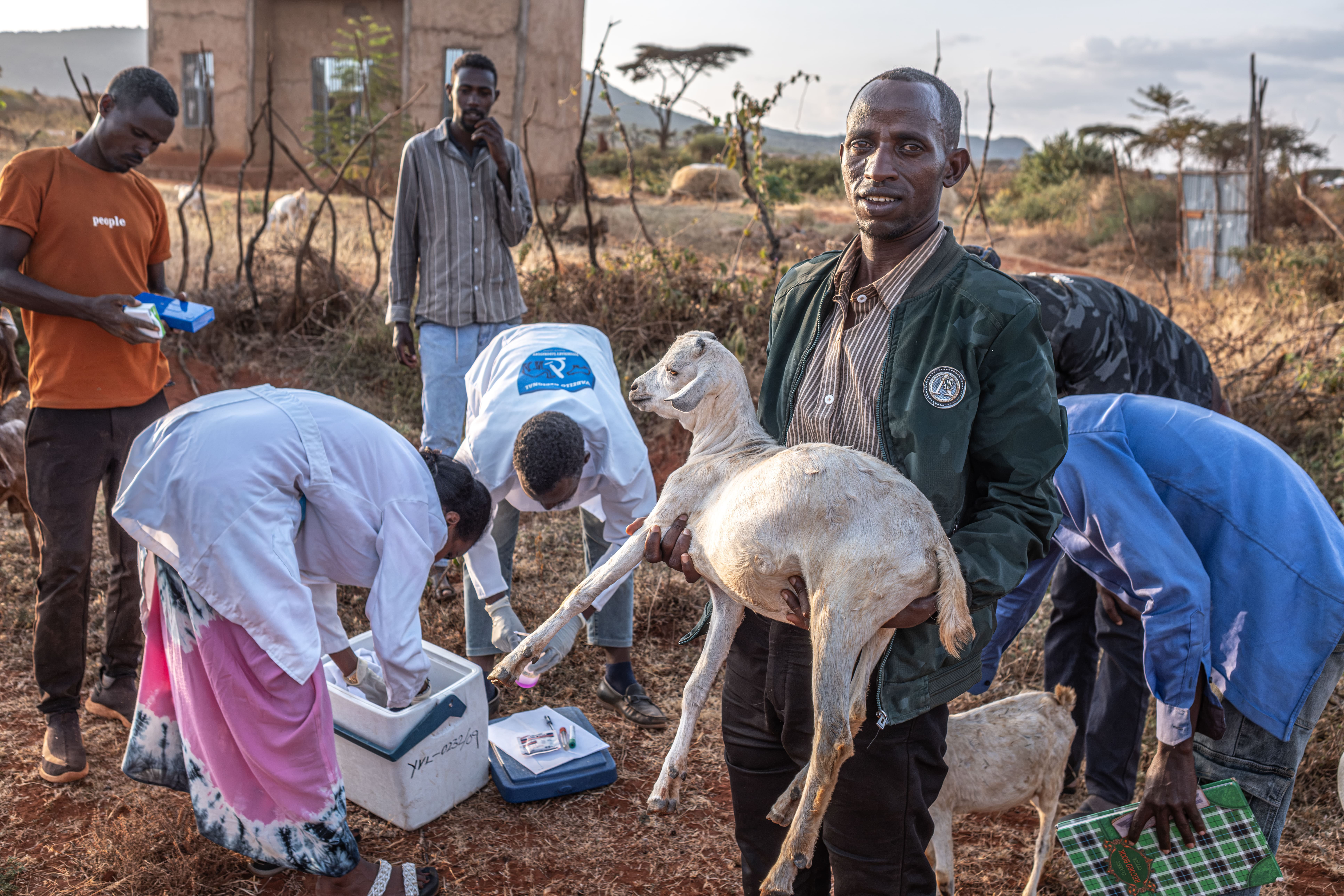
Veterinary teams operating from a mobile clinic collect samples from animals in villages around Yabelo and prepare them for testing. At the Yabelo Veterinary Laboratory, technicians analyse samples to identify infections, while mobile teams vaccinate livestock and advise pastoralists on disease prevention.
A story for AFP Factstory about an ambitious project that, if it works as intended, could significantly strengthen the resilience of Borana pastoralists to drought, livestock disease and economic loss.


