Ethiopia 2026 – AFP
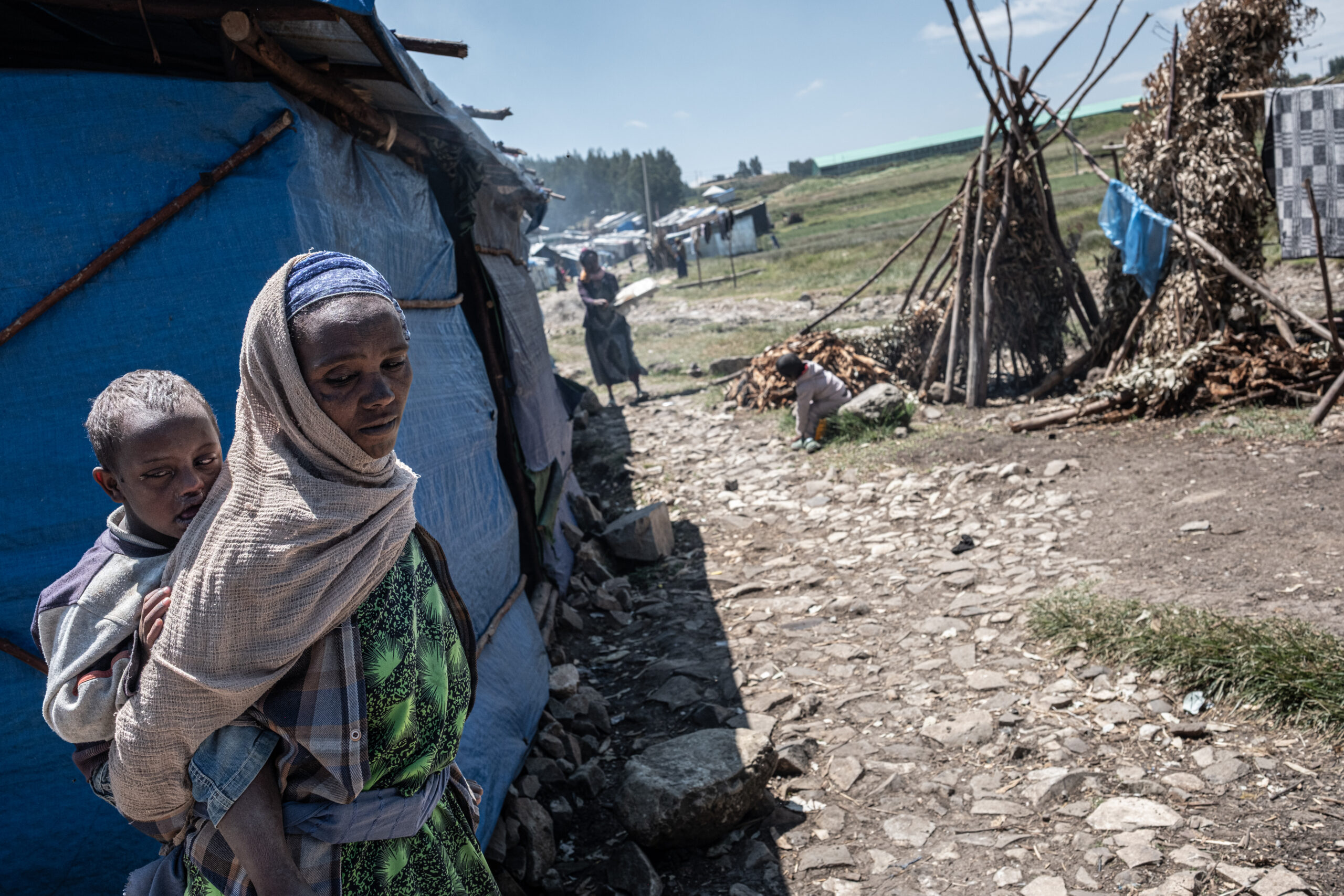
Home to thousands of internally displaced Amharas, Bakelo and China camps in Debre Berhan, Ethiopia, shelter families who fled conflict and ethnic violence in Oromia, particularly Wollega and West Shewa. Some have been displaced since 2022. China camp alone houses around 12,000 people.
Between 3,000 and 4,000 people have arrived in Debre Berhan over the past five months. Food distributions have stopped or become increasingly irregular, while funding shortages have forced most NGOs to withdraw or reduce their services. Doctors with Africa CUAMM remains the only NGO operating in China camp.
Across Amhara, only 16 of the 57 mobile health and nutrition teams needed are operating. Ten of these are expected to shut down by the end of October as funding runs out.
Families live in tents or share warehouses crowded with their belongings. Women prepare meals in small living spaces and weave baskets, children study, and some residents have started small businesses. For many older people and people with disabilities, even basic assistance is missing.
Meanwhile, federal forces and TPLF fighters are again at war in northern Ethiopia, including Tigray and its borders with Amhara and Afar. The 2022 peace agreement left disputes over territory, disarmament and regional control unresolved.
September’s “Alliance for Survival” brings the TPLF, the Amhara Fano National Movement and the Oromo Liberation Army (OLA) together against the federal government. Some camp residents see a bitter paradox in Fano, which claims to defend Amharas, allying with the OLA, which they blame for driving them from their homes.
With violence continuing in their areas of origin and assistance dwindling in the camps, they fear they may never be able to return home.


