Ethiopia 2026 – AFP
Long before sunrise, while much of Addis Ababa was still asleep, voters were already queuing outside polling stations across the Ethiopian capital to take part in a general election widely expected to deliver another landslide victory for Prime Minister Abiy Ahmed and his Prosperity Party.
The June 1 vote represented an important political milestone for a country of more than 130 million people still struggling with the aftermath of multiple conflicts, economic hardship and unresolved political tensions. More than 50 million Ethiopians were registered to vote, but large parts of the country remained affected by insecurity. In Tigray, where a devastating civil war ended only in late 2022, no voting took place. In Amhara, where federal forces continue to battle Fano insurgents, dozens of polling stations were unable to open. Similar security concerns affected parts of Oromia.
In the days leading up to the election, I travelled from Addis Ababa to Jimma and Beshasha, the Prime Minister’s political stronghold and hometown in western Oromia. Despite the importance of the vote, visible campaigning was surprisingly limited across much of the country. Posters, rallies and public events were far less prominent than during previous electoral cycles.
Yet in Jimma, large murals and campaign posters celebrating Abiy Ahmed dominated key areas of the city. In nearby Beshasha, residents spent days cleaning roads, planting flowers and preparing public spaces ahead of the Prime Minister’s return to cast his ballot. Many local supporters openly praised the leader they credit with bringing roads, public squares, schools and infrastructure projects to an area that for decades remained largely neglected.
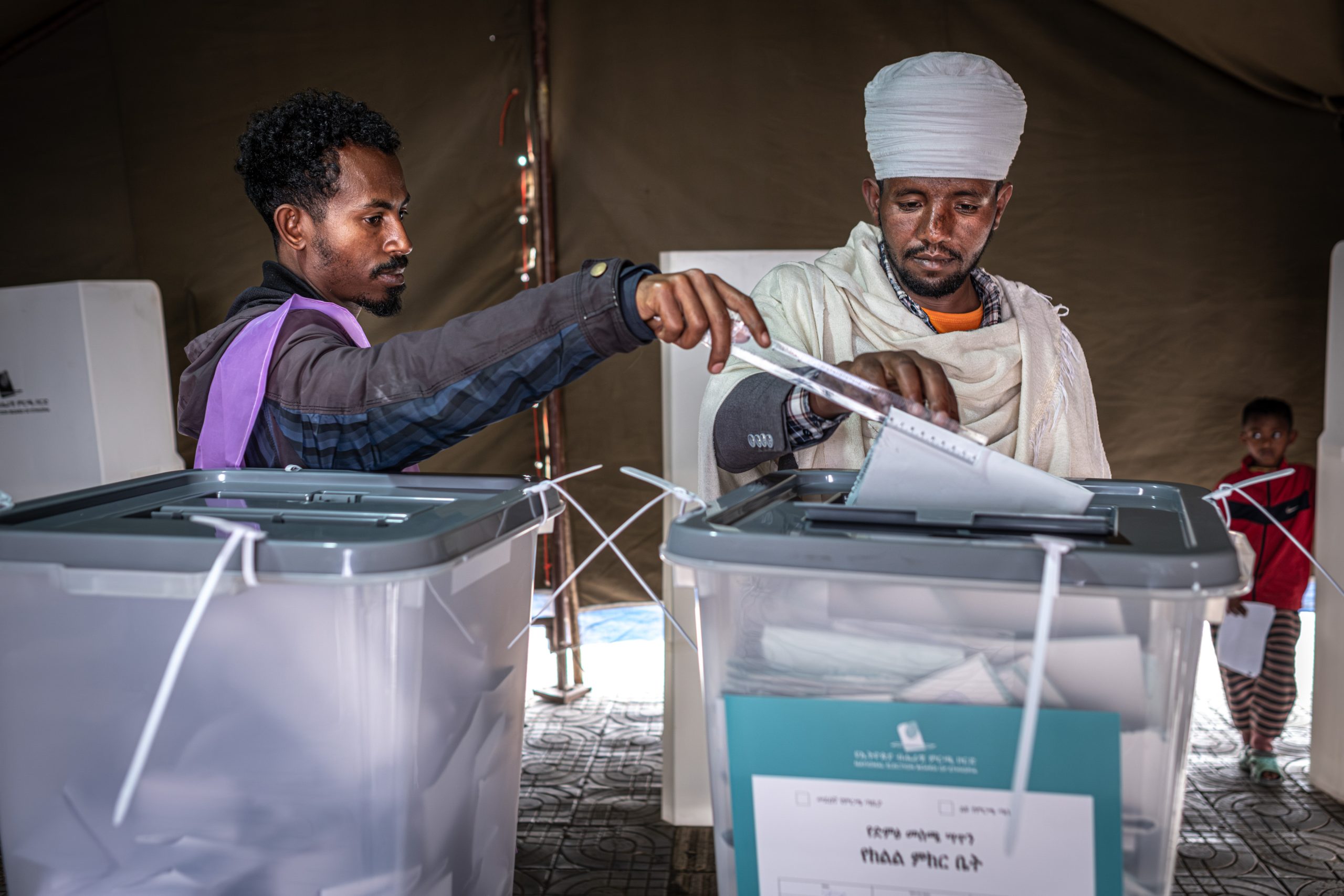
Election day in Addis Ababa told a more nuanced story. Voting proceeded slowly in many locations, with administrative delays and long queues stretching throughout the day. As turnout remained high in several districts, the National Election Board of Ethiopia (NEBE) extended voting hours until midnight. The board later announced that 143 polling stations nationwide had failed to open because of security concerns.
The election unfolded against a backdrop of growing concerns over political freedoms, restrictions on independent media and the shrinking space for opposition parties. At the same time, many Ethiopians acknowledge that Abiy Ahmed is profoundly reshaping the country. Through economic liberalisation, financial reforms and ambitious infrastructure programmes such as the Corridor Development Project, the government hopes to attract foreign investment and position Ethiopia as a regional economic powerhouse.
But the challenges remain immense. Inflation continues to erode purchasing power, public debt remains high, millions of people still depend on humanitarian assistance and conflicts continue to displace communities across several regions.
Whether Abiy Ahmed’s promise of prosperity can ultimately overcome Ethiopia’s deep political and ethnic divisions remains one of the country’s defining questions.


