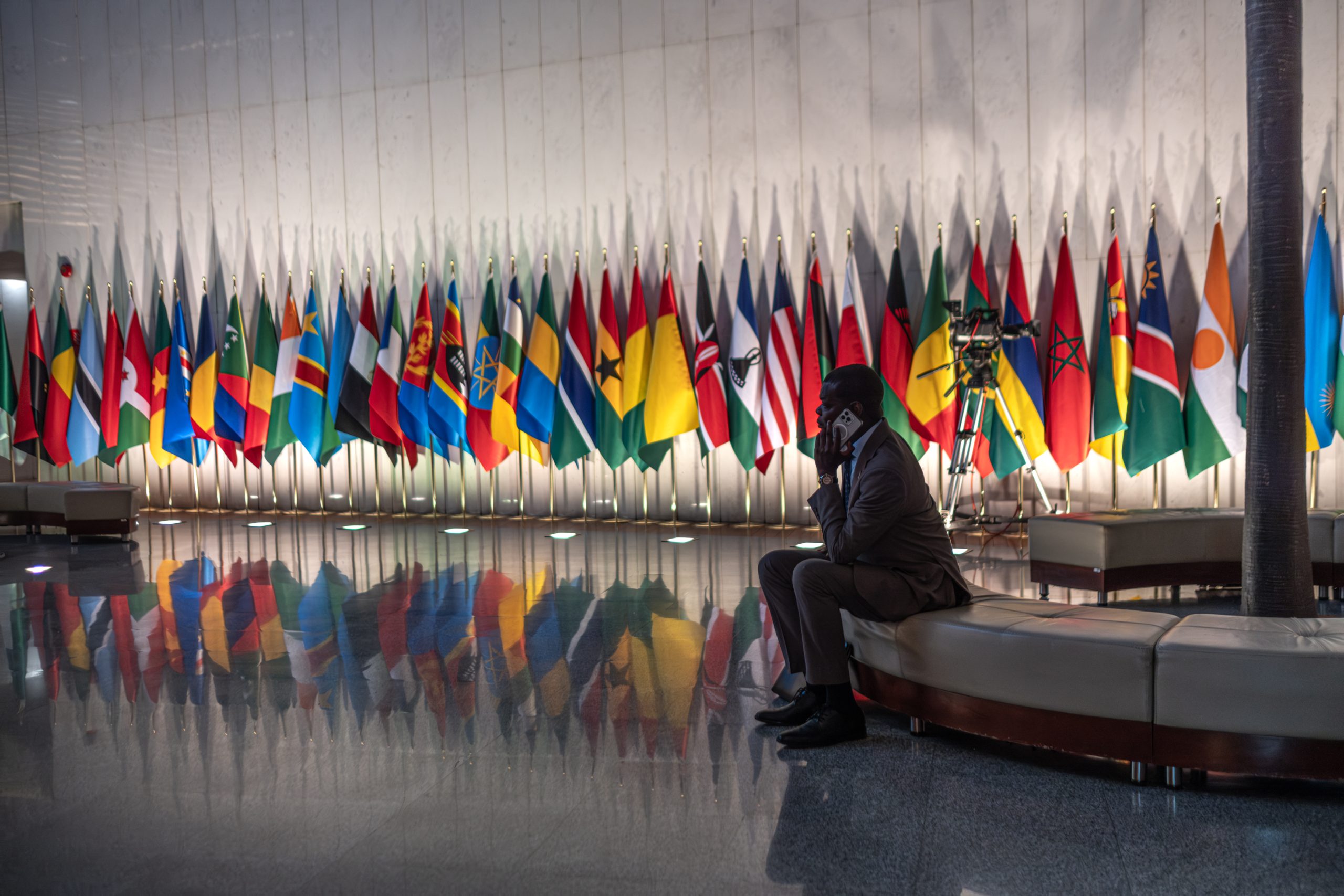
Ethiopia 2026 – AFP, Africa & Affari
The 39th African Union Summit concluded yesterday in Addis Ababa, bringing together heads of state and government at a particularly fragile moment for the continent.
This year’s gathering was preceded by the Italy-Africa Summit, where Italian Prime Minister Giorgia Meloni sought to strengthen her so-called Mattei Plan. The initiative remains difficult to assess in terms of concrete impact, yet her participation in the official opening ceremony of the AU Summit marked an unprecedented moment for an Italian premier. It remains unclear how much traction or recognition the plan has gained among African leaders.
The summit unfolded amid multiple humanitarian crises, ongoing conflicts and a worsening climate emergency across the continent. From Sudan to the Democratic Republic of the Congo, no clear political breakthroughs emerged. In the Horn of Africa, rising tensions between Ethiopia and Eritrea, with Tigray at the center, continue to threaten regional stability.
The African Union continues to struggle to project strong, unified responses — and above all to ensure effective conflict prevention and resolution. The institution, which represents more than 1.5 billion people, remains heavily dependent on external funding: roughly 64 percent of its 700-million-dollar annual budget comes from international partners. Recent funding cuts from major donors have further constrained its room for manoeuvre, while the United Nations — itself facing budget reductions — can no longer play the same mediating role in African conflicts. Analysts argue that at a time when the AU is most needed, it may also be at one of its weakest points in recent decades.
Its credibility is further tested by inconsistencies in the handling of coups, with Guinea and Gabon readmitted following elections after military takeovers, while other Sahel states remain suspended. Debates persist over whether the AU is applying pragmatic flexibility or undermining its own governance principles.
Presidents such as Félix Tshisekedi, Mamady Doumbouya, Salva Kiir and Faustin-Archange Touadéra were photographed during the summit — leaders who are often difficult to approach or document in their own countries. Regional gatherings like this sometimes offer rare moments of visibility, even as access to power at home remains tightly controlled.


