Ethiopia 2026 – Libération
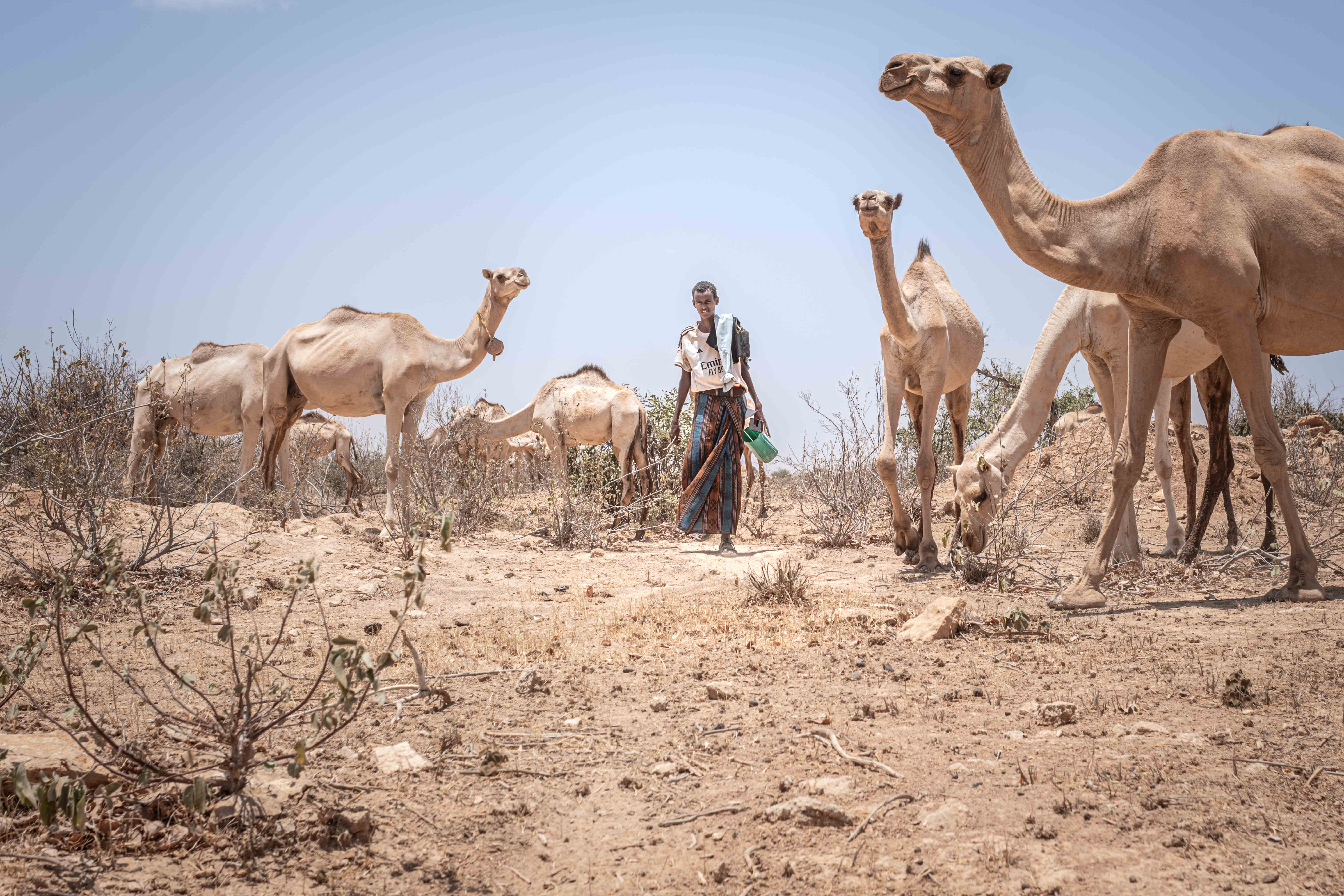
Across the dry plains north of Gode, in Ethiopia’s Somali Region, 23-year-old pastoralist Abdifattah Mohammed walks behind around forty dromedaries entrusted to him by local families. The Gu rains came late and were too weak. Water can still be found, but pasture has almost disappeared.
The region is still recovering from the 2020–2023 drought, caused by five consecutive failed rainy seasons. Mobility and mutual support once helped pastoralists survive. Today, scarcity is eroding trust. “When resources are scarce, people do not always give you accurate information. We go and verify for ourselves,” Abdifattah says.
At Ubaley pool, Faisic Abdi Mohammud pushes his last five emaciated cows towards the water. He travelled 65 kilometres with eight other families after the Gu rains almost completely failed near his home. His family eats once a day and his children have left school. “Without this water, we would not have survived,” he says. “There is no longer a cycle to follow.”
Inflation is tightening the trap. At the wells of Hadhaawe, Bashir Ali Ousman sells his healthiest goats to buy sorghum and maize for his camels. A sack that cost 1,500–2,000 birr before the crisis in Iran and the Strait of Hormuz now costs 4,500–5,000.
Some families are abandoning mobility for agropastoralism. Near Cilaan, a WFP irrigation project helps 242 households cultivate land with water from the Shabelle River. But higher fuel and fertilizer costs and falling crop prices leave even them exposed to another shock.
That shock may already be approaching. El Niño is expected to bring above-normal rainfall between October and January, raising the risk of flash floods. Communities pushed to the limit by too little water may soon face too much of it.
Since this report was produced, fighting has again spread across northern Ethiopia, where Tigray and Amhara were also hit by drought. With a new alliance of armed groups challenging the federal government, the conflict risks disrupting humanitarian access just as vulnerable communities prepare for El Niño.


