Zambia 2026 – DW, RSI
“At times, even in the community, you’re able to find ten elephants,” says Chamu, a ranger with the Conservation and Tourism Society (CATS).
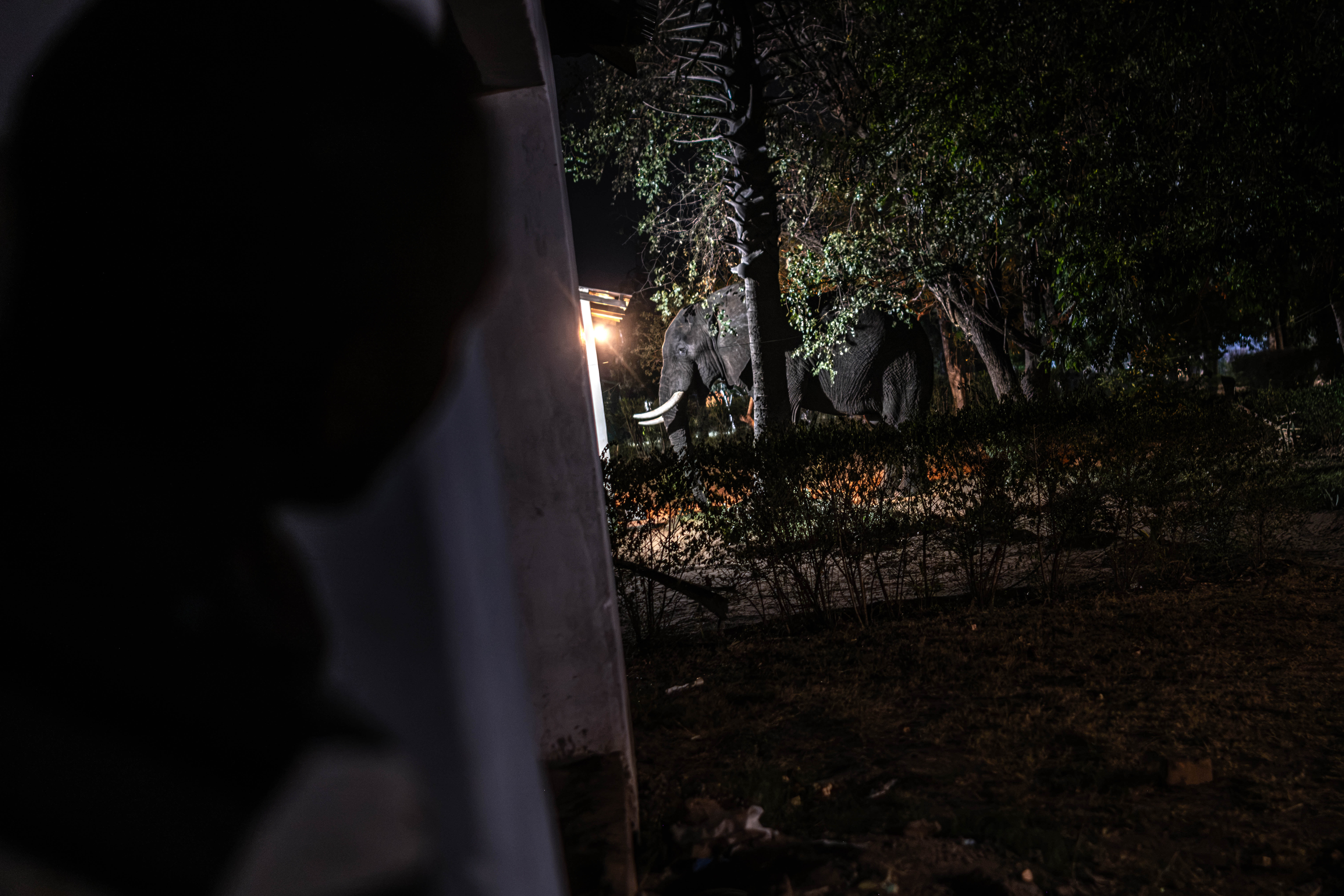
As we patrol Dambwa South after dark, elephants emerge between houses, searching for food in gardens and rubbish dumps. Alongside local volunteers, Chamu installs temporary electric wires to keep them away from residential areas. Much of the work involves trying to prevent dangerous encounters with people walking home at night, sometimes intoxicated, through streets that elephants also use.
Here, the boundary between a neighbourhood and a wildlife habitat is difficult to draw. The same paths connect homes, gardens and the places where elephants find food.
In Livingstone, southern Zambia, coexistence with elephants is part of daily life. The town borders Mosi-oa-Tunya National Park and lies along traditional elephant migration routes. As residential neighbourhoods and luxury resorts have expanded into these corridors, the space available to wildlife has narrowed. During the dry season, when food becomes scarce, elephants venture into built-up areas in search of water, mangoes and crops, breaking fences and damaging homes.
For residents, their presence can mean losing a harvest, changing the way they move around their neighbourhood or fearing that a familiar journey could end in tragedy.
Brenda Sampa lost her sister in an elephant attack that left six children without their mother. She now helps care for them, while continuing to walk along the same path where her sister was killed.
“I’m afraid, but there’s no other route,” she explains.
Her experience reveals how difficult it can be to avoid danger when the routes people depend on overlap with those used by elephants. Going home means returning to a place where the threat remains.
The economic consequences also shape everyday decisions. Some families have abandoned farming after repeatedly losing their crops, turning instead to fish farming or poultry. For households growing food close to their homes, elephants can destroy both a source of income and something they depend on to eat.
Across the neighbourhoods, residents improvise ways to protect what they have. Glass bottles and reflective foil hang along fences to frighten elephants away. CATS tests barriers made of sharp stones and promotes chilli bombs, which release smoke to deter the animals. Night patrols and temporary electric wires form another part of this effort to keep people and elephants apart.
Prevention also depends on how people behave around wildlife. The organisation uses traditional initiation ceremonies to teach young people about the risks of provoking elephants, bringing conservation messages into existing community practices.
Yet residents remain frightened and frustrated. While tourism continues to expand, they feel they receive too little support in dealing with the dangers and losses that come with living alongside wildlife.
“We’ve caused the problem ourselves,” says Phineas Munene, a community representative in Linda. Land once used by elephants has been taken over by buildings and resorts, leaving people and animals to navigate an increasingly crowded landscape.
In Livingstone, the wider challenge of human-elephant coexistence takes a very immediate form: a damaged garden, a night patrol, a journey home. As the town grows around established wildlife routes, both residents and elephants are living with the consequences.


