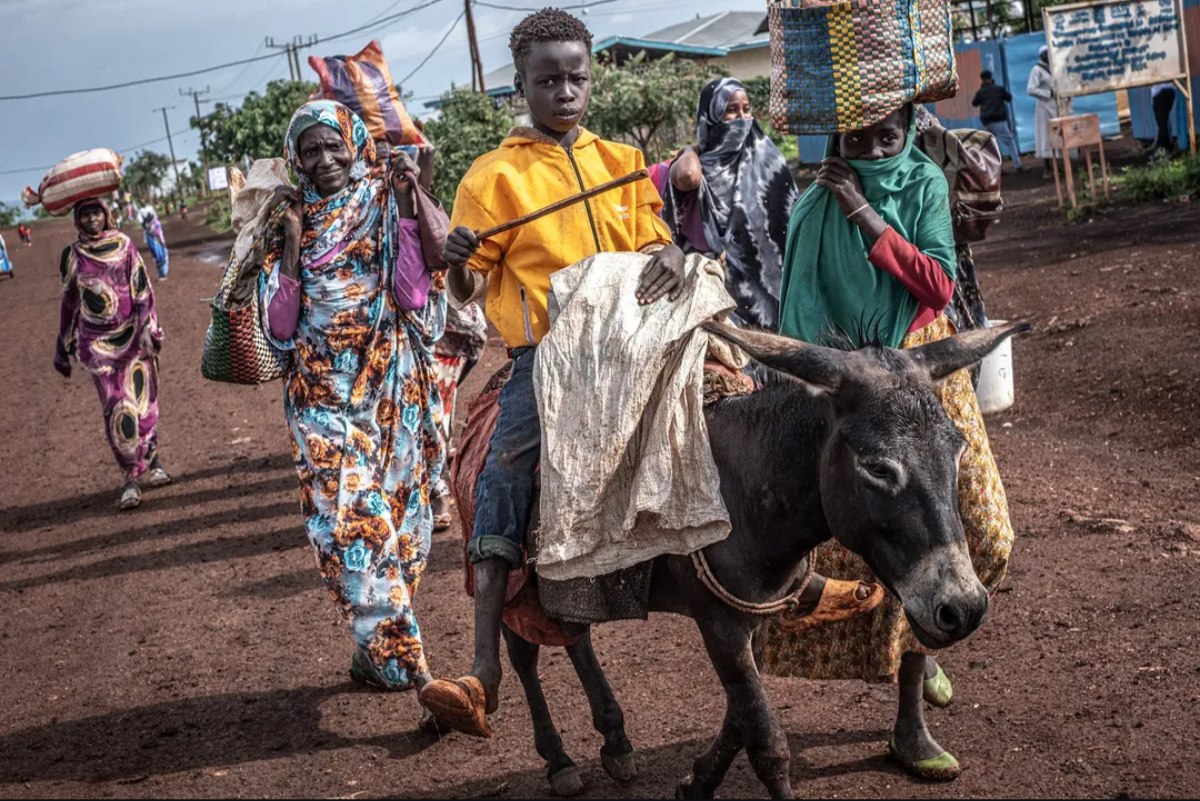
Ethiopia 2026 – AFP
More than 123 million people worldwide have been forcibly displaced by conflict, persecution and disasters. Nearly 70 million of them are in Africa, a continent increasingly affected by war, political instability and climate shocks.
With more than 1.1 million refugees and asylum seekers, Ethiopia ranks among the top three refugee hosting countries in Africa.
Home to more than 14,500 Sudanese refugees, Ura Refugee Site lies among the green hills of Ethiopia’s Benishangul-Gumuz region, not far from the Sudanese border and the war that has displaced millions of people.
World Refugee Day was marked by a visit from UN High Commissioner for Refugees Barham Ahmed Salih, who met refugees, community leaders and local authorities.
Despite the uncertainty, life continues. Some refugees have managed to open small businesses. Others have returned to school and recently sat for their exams. Many are registering to participate in Ethiopia’s new refugee inclusion programme, hoping to rebuild a sense of normality while waiting for a future that remains uncertain.
Large scale displacement often creates tensions with host communities over land, jobs and resources. Here, Ethiopia and UNHCR are implementing the Makatet Roadmap. Makatet means “inclusion” in Amharic. The initiative aims to move beyond the traditional camp model by integrating refugees into public services, schools, livelihoods programmes and local economies alongside host communities.
The local community around Ura has largely welcomed the newcomers. During the World Refugee Day celebrations, refugees and members of the host community gathered together to watch performances, listen to speeches and share a rare moment of optimism.
Everyone hopes these families will one day return home. But Africa’s history is full of refugee crises that lasted years, sometimes generations. When displacement becomes long term, finding ways for refugees and host communities to live side by side may be just as important as emergency assistance itself.


