South Sudan 2026 – DW, Mediapart, Afrique XXI, Globalnyt, Panorama Nyheter, Nigrizia, NewLines Magazine
Oil, climate and a slow moving disaster in South Sudan
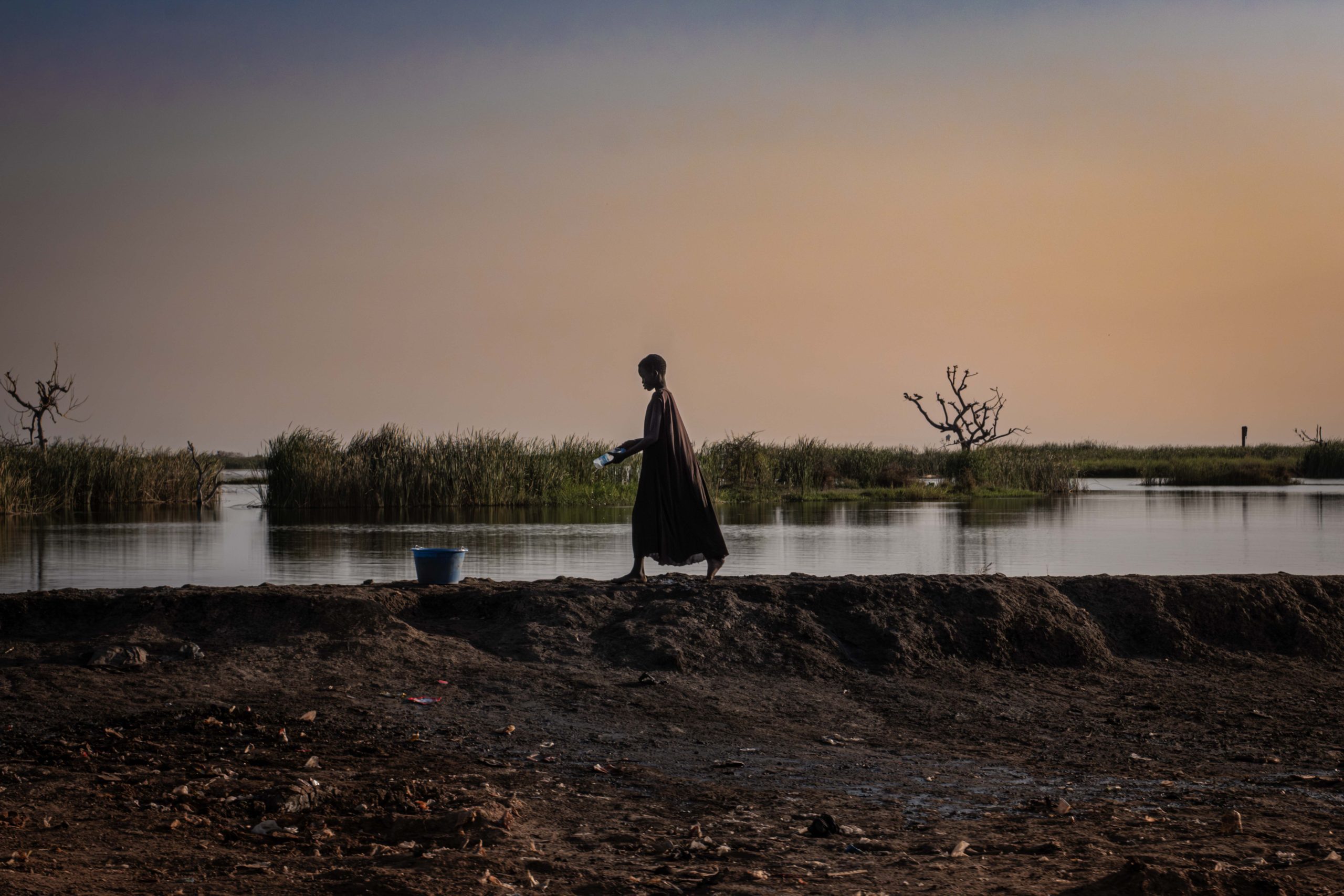
Since 2021, Unity State in northern South Sudan has been slowly swallowed by water.
What began as extreme flooding in a region already devastated by years of civil war has turned into prolonged submersion. Seasonal rains intensified beyond living memory. Rivers burst their banks. Low lying plains disappeared. Entire villages around Bentiu and Rubkona were washed away. Fields vanished beneath stagnant water. Cattle died. Crops failed. A way of life built on agriculture and pastoralism collapsed.
But the floods did not only drown homes and grazing land.
Unity State has been South Sudan’s oil heartland since the late 1990s. Wells, pipelines and wastewater ponds were built across savannah and wetlands long before the current climate crisis deepened. Maintenance had been inconsistent for years, and oil spills had already been reported in the past. When the waters rose in 2021, large parts of this infrastructure were engulfed. Some installations remain partially submerged today.
Geospatial analysis conducted in collaboration with Placemarks shows that more than 150 wells in Block 2 alone were flooded for prolonged periods. Infrastructure never designed to operate underwater was left exposed to corrosion, pressure and environmental stress.
At the same time, Unity State became one of the country’s largest displacement hubs. Nearly 140,000 people live in Bentiu’s displacement camp. Beyond the camp, thousands more in Bentiu and Rubkona remain trapped between fragile dikes, rising waters and a conflict that never truly ended.
“The water on the northern side of the camp, towards the oil wells, is not clean,” says one internally displaced resident. “The fish from there are sold cheaper at the market. We all know they are contaminated. It is luer.”
In Nuer, the word luer once meant something spoiled or rotten. Today, it carries a heavier meaning. Pollution. Poisoned water. Contaminated soil.
Recent expert assessments confirm the presence of mercury, lead and hydrocarbons in soil and water samples collected in the area. Residents speak of recurring illness. Doctors report increasing cases of children born with severe deformities. Livestock die without clear explanation. Fish are found floating lifeless in stagnant pools.
In Roriak, an informal settlement that expanded as people fled both conflict and floods, families now live beside abandoned oil infrastructure. Pipelines cut through compounds. Rusting metal structures stand above flooded ground.
At Bentiu Civil Hospital, a mother holds her newborn tightly against her chest. The baby was born with visible deformities in his hands and lip. “My child was born like this,” she says quietly. “I don’t know what caused this.”
There is no comprehensive medical registry. Scientific verification remains extremely difficult in a country with minimal diagnostic capacity. Yet the consistency of testimonies across communities is striking.
Authorities and international actors operating in the region are aware of contamination concerns. Warnings about pollution in Unity State date back more than a decade. However, no comprehensive independent environmental assessment has been conducted at scale, and no large scale remediation effort has followed.
One member of parliament says she raised the issue directly with President Salva Kiir. “I showed him pictures of children born with deformities. He told me he was shocked and that something would be done. This was 2023. Up to date, nothing has happened.”
This investigative reportage documents a slow moving disaster that does not explode in a single moment of destruction. It seeps. It accumulates. It poisons land, water and bodies over time.
The project combines on the ground reporting, testimonies from displaced communities, doctors, local authorities and researchers, with satellite analysis developed together with Placemarks to map flooded oil installations and environmental change across Unity State.
This investigative reportage is supported by the Pulitzer Center on Crisis Reporting.


